

Not every VPN buyer is chasing a streaming library. A large — and growing — group of users want a VPN for what it was originally built for: keeping their traffic private, their identity shielded, and their data out of reach of anyone who shouldn’t have it, from advertisers to attackers on public Wi-Fi. If that’s your priority, the features that matter shift dramatically. Server count and streaming libraries take a back seat to encryption standards, audited no-logs policies, jurisdiction, and how a provider behaves if it’s ever compelled to hand over data.
We dug into the technical documentation, independent security audits, and jurisdictional details of the industry’s most privacy-focused VPNs to build this list. These are the five providers that back up their privacy claims with verifiable evidence, not just a badge on their homepage.
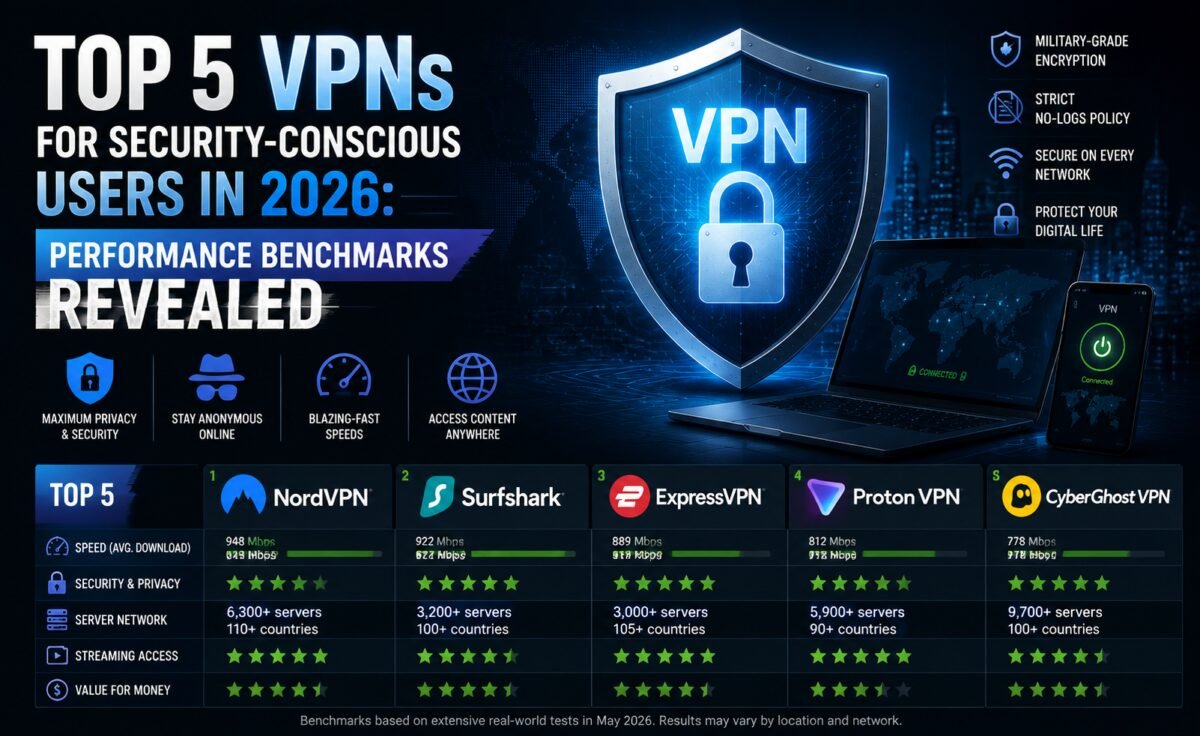
Quick Comparison Table
| VPN | Independent Audit | Jurisdiction | Kill Switch | Best For |
|---|---|---|---|---|
| ProtonVPN | Yes | Switzerland | Yes | Maximum transparency |
| Mullvad | Yes | Sweden | Yes | Anonymous sign-up |
| NordVPN | Yes | Panama | Yes | Advanced security suite |
| ExpressVPN | Yes | British Virgin Islands | Yes | Trusted server technology |
| Private Internet Access | Yes | United States | Yes | Open-source transparency |
1. ProtonVPN — Best for Radical Transparency
ProtonVPN operates out of Switzerland, a jurisdiction with some of the strongest privacy protections in the world, and it’s baked that ethos into every part of the product. Its apps are fully open-source and have been independently audited multiple times, meaning outside security researchers — not just the company itself — have verified that the no-logs claims hold up in practice.
Security-wise, ProtonVPN supports modern encryption protocols, offers Secure Core routing that bounces your traffic through hardened servers in privacy-friendly countries before it exits to the internet, and includes a built-in kill switch that cuts your connection instantly if the VPN drops. For anyone who wants to verify rather than just trust, ProtonVPN publishes detailed transparency reports.
- Pros: Open-source and independently audited, Swiss jurisdiction, Secure Core multi-hop routing, solid free tier
- Cons: Slightly more technical interface than mainstream competitors
2. Mullvad — Best for Truly Anonymous Sign-Up
Mullvad takes anonymity further than almost anyone else in the industry: you don’t need an email address to sign up. Instead, you’re issued a random account number, and you can even pay with cash mailed to their office if you want to leave zero digital trail connecting your identity to your subscription.
Beyond the sign-up process, Mullvad’s infrastructure and no-logs policy have both been independently audited, and the company has a long track record of resisting government data requests — partly because there’s simply nothing tied to individual users for them to hand over. The flat pricing, with no tiers or upsells, also reflects a company that’s more focused on the product than the marketing funnel.
- Pros: No email required, cash payment option, flat simple pricing, strong audit history
- Cons: Smaller server network, no live chat support
3. NordVPN — Best for a Full Security Toolkit
NordVPN pairs its no-logs policy — confirmed by multiple independent audits — with an expanding suite of security features that go beyond basic tunneling. Its Double VPN feature routes traffic through two separate servers for an extra layer of encryption, while its Threat Protection tool blocks malicious sites, trackers, and intrusive ads at the network level, even when the VPN itself isn’t switched on.
For users who’ve had a password compromised in a data breach, NordVPN also includes a monitoring feature that scans for your credentials appearing in known leaks — a genuinely useful addition that most competitors don’t offer. All of this comes wrapped in an app that remains approachable despite the depth of features underneath.
- Pros: Double VPN, dark-web credential monitoring, malware and tracker blocking, RAM-only servers
- Cons: Panama jurisdiction is privacy-friendly but less transparent than Switzerland or Sweden
4. ExpressVPN — Best for Verified Server Infrastructure
ExpressVPN’s standout privacy feature is what it calls TrustedServer technology — every server runs entirely on RAM rather than a hard disk, meaning all data is wiped completely on every reboot. Combined with regular independent audits of both this technology and its no-logs claims, it’s one of the more thoroughly verified infrastructures in the industry.
The company is based in the British Virgin Islands, a jurisdiction outside major international data-sharing alliances, which adds another layer of legal protection against data requests. ExpressVPN also publishes a regularly updated transparency report detailing government requests it has received and how it responded.
- Pros: RAM-only server infrastructure, favorable jurisdiction, regular transparency reporting, strong audit history
- Cons: Premium pricing compared to privacy-focused competitors
5. Private Internet Access — Best for Open-Source Verification
Private Internet Access (PIA) has made its entire application open-source, meaning anyone — not just paid auditors — can inspect the code that handles your traffic and data. Combined with an independently audited no-logs policy and a proven track record of court cases where PIA was subpoenaed and had no user data to hand over, it’s a provider whose privacy claims have genuinely been tested under real legal pressure.
PIA also allows extensive customization of its encryption settings for advanced users who want to fine-tune the balance between speed and security, while still offering sensible defaults for anyone who’d rather not touch the settings at all.
- Pros: Fully open-source apps, proven in real court cases, highly configurable encryption, budget-friendly
- Cons: Based in the United States, which some privacy purists prefer to avoid despite the strong track record
What “Privacy” Actually Means in a VPN
Marketing pages love the word “privacy,” but a handful of concrete factors determine whether it’s real:
- Independent audits — a company’s own claims mean little without outside verification from a reputable security firm.
- Jurisdiction — where a VPN is legally headquartered determines what data-sharing agreements and legal requests it can be compelled to comply with.
- RAM-only or diskless servers — data that’s never written to a hard disk can’t be seized or recovered later.
- Kill switch reliability — a good kill switch cuts your internet the instant the VPN connection drops, preventing any accidental exposure of your real IP address.
- Track record — has the company ever actually been tested by a subpoena or data request, and what happened?
Red Flags to Watch for in a “Privacy-Focused” VPN
Plenty of providers lean heavily on privacy language in their marketing without much substance behind it. A few warning signs are worth knowing before you commit to a subscription:
- Vague ownership structures — a legitimate provider should be transparent about who owns and operates it, since ownership can reveal ties to advertising networks or data brokers.
- No published transparency report — reputable privacy-focused VPNs regularly disclose how many government or law enforcement data requests they’ve received and how they responded.
- Free apps with no clear business model — if a VPN is free and there’s no visible paid tier or other legitimate revenue source, monetizing user data becomes a real possibility.
- Weak or outdated encryption defaults — a genuinely security-focused provider should default to modern, well-vetted encryption standards rather than legacy protocols with known weaknesses.
Beyond the VPN: Habits That Reinforce Your Privacy
Even the best VPN is only one layer of a broader privacy approach. Pairing it with a few complementary habits meaningfully strengthens your overall protection. Using a privacy-respecting browser alongside your VPN reduces tracking that happens independently of your network connection, since browser fingerprinting and cookies can still identify you even with your IP address masked. Enabling your VPN’s kill switch by default, rather than only when you remember to, ensures you’re never accidentally exposed during a dropped connection. And regularly reviewing which apps and services have access to your location, contacts, and other device permissions closes gaps that a VPN alone can’t cover, since a VPN protects your network traffic, not what happens on the device itself.
It’s also worth periodically checking your chosen provider’s latest audit reports and transparency disclosures rather than assuming the claims that convinced you to sign up remain accurate indefinitely. Reputable providers publish these updates regularly, and a provider that stops publishing them is itself worth noticing.
Frequently Asked Questions
Does a “no-logs” claim actually mean nothing is recorded?
It should mean no identifying activity or connection logs are stored, but the only way to trust that claim is through independent audits and, ideally, a real-world legal test where the company had nothing to hand over.
Is a VPN based in the US or UK automatically less private?
Jurisdiction matters, but it’s not the only factor — a well-audited, open-source, RAM-only provider based in a less ideal jurisdiction can still be more trustworthy than a poorly verified one based somewhere privacy-friendly.
Do I need Double VPN or multi-hop routing?
Most users don’t need it day-to-day, but it’s a valuable option to have available for situations where you want an extra layer of protection, such as sensitive research or communications.
Can my internet provider still see that I’m using a VPN?
Your ISP can typically see that you’re connected to a VPN server, since that connection itself isn’t hidden, but it cannot see the content of your traffic or which specific sites and services you’re visiting once your connection is encrypted.
Is it worth paying more for a privacy-focused VPN over a cheaper alternative?
If independent audits, jurisdiction, and a proven legal track record genuinely matter to you, the answer is generally yes — privacy claims that haven’t been externally verified are, at best, unproven, and at worst, simply untrue.
Final Verdict
For the most rigorously verified transparency, ProtonVPN and Mullvad are the two standouts — both open-source, both independently audited, both operating from privacy-friendly jurisdictions. If you want that same audited trustworthiness paired with a broader feature set, NordVPN and ExpressVPN deliver serious security tooling without sacrificing usability. Private Internet Access rounds out the list as the most budget-friendly option that still holds up to genuine scrutiny.



Leave a Reply