

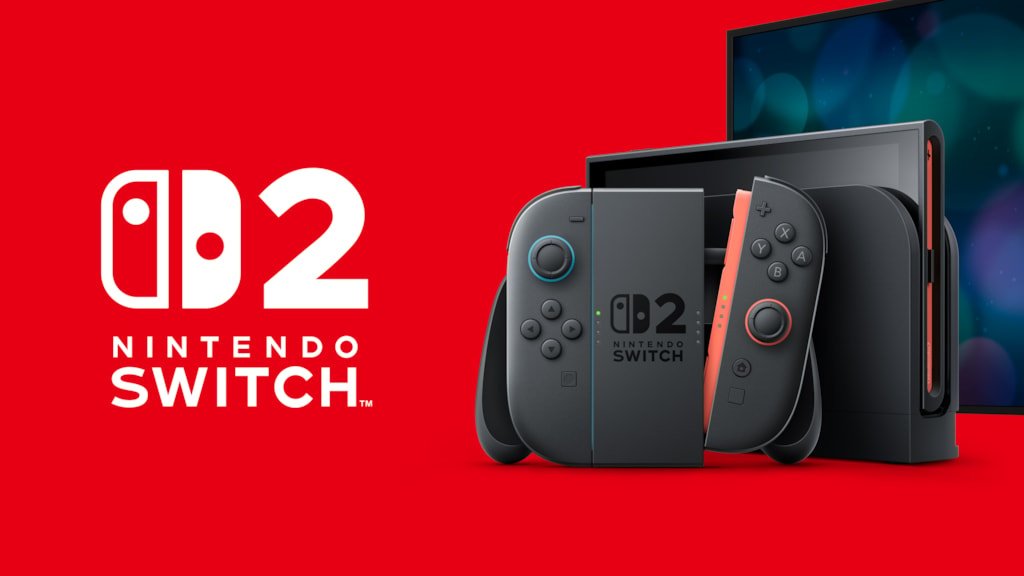
One year after launch, the Nintendo Switch 2 has become the defining hardware story of this console generation. Nintendo’s official fiscal year 2026 results confirm the console sold 19.86 million units worldwide through March 31, 2026 — less than ten months after its June 5, 2025 debut. That figure clears the fastest-selling pace of the original Switch over the same window, outpaces Sony’s PlayStation 5 in recent quarterly sales, and has been credited with dragging the entire console market back toward growth after several sluggish years.
A Launch for the History Books
The Switch 2’s opening days set the tone for everything that followed. Nintendo confirmed the console moved more than 3.5 million units worldwide in its first four days on sale — the fastest launch of any Nintendo system ever. By the close of December 2025, cumulative sales had already surged past 17.37 million units, and Nintendo’s net sales for the nine months ending that December had nearly doubled year-on-year, reaching roughly 1.9 trillion yen, or approximately $12.2 billion.
By the time Nintendo closed its books on the full fiscal year in March 2026, the console had cleared its own internal guidance of around 19 million units, landing at 19.86 million — within roughly 140,000 units of the symbolic 20 million milestone.
Outselling PlayStation 5, Quarter After Quarter
Perhaps the most striking comparison in Nintendo’s fiscal year data involves its closest competitor. In the January–March 2026 quarter alone, Nintendo shipped 2.49 million Switch 2 units to retailers, outselling the PlayStation 5 by roughly one million units over the same three months — meaning Sony’s console likely shipped somewhere in the neighborhood of 1.49 million units in that window, though Sony does not break out that specific figure publicly.
That gap matters less in cumulative terms — the PS5 remains far ahead lifetime, having shipped more than 93 million units worldwide as of March 30, 2026, following a strong year of its own with roughly 20.8 million units moved — and more as a trajectory signal. The PS5 is now five years into a mature, discount-driven phase of its life cycle, with US dollar spending on the platform down 43% year-over-year in May 2026 following Sony’s own price increases. A one-year-old, still supply-constrained Nintendo console outselling it quarter-to-quarter is exactly the kind of data point Nintendo wanted on the record heading into its second year.
The US Market: Second-Fastest-Selling System Ever
In the United States specifically, the Switch 2 closed its first twelve months at 5.9 million units sold, according to tracking firm Circana. That makes it the second-fastest-selling video game system in US retail history since Circana began tracking sales in 1995 — trailing only the Game Boy Advance, which moved 6.5 million units in its own debut year. US hardware spending rose 38% year-on-year in May 2026 alone, reaching $249 million, with the Switch 2 topping the charts in both units sold and dollars spent for the month and for the year to date.
Japan’s Buy-Ahead Rush Before a Price Hike
Japan told a slightly different story. Domestic lifetime sales reached roughly 5.9 million units by early June 2026 — putting the Japanese market on par with the US in total volume — but the path there included a notable spike. During the week of May 11–17, 2026, Japan recorded weekly sales of 217,922 units, driven by shoppers rushing to buy ahead of a price increase that took effect on May 25. That hike raised the console’s Japanese price from ¥49,980 to ¥59,980, roughly a 20% jump, and reportedly cut weekly sales in the country by as much as 87% once it took effect — a sharp reminder of just how price-sensitive even a red-hot launch can remain.
Software Sales Powering Nintendo’s Best Year Ever
Hardware wasn’t the only record broken. Nintendo also moved 48.71 million Switch 2 software units during the same fiscal year, an attach rate of roughly 2.45 games per console — a healthy figure for a platform still building out its library. Mario Kart World led the pack by a wide margin, with 14.70 million copies sold. Combined, the hardware and software numbers pushed Nintendo’s net sales up 98.6% year-on-year to approximately 2,313.1 billion yen (around $15.8 billion), with operating profit climbing 27.5% — officially making fiscal year 2026 the most profitable year in the company’s history.
Why Nintendo Expects Growth to Slow in FY2027
Despite the record-setting year, Nintendo’s own forecast for the fiscal year ending March 2027 calls for a deceleration: 16.5 million Switch 2 units, down from the 19.86 million just delivered. The company has been candid about the reasoning, describing the launch year as reaching a sales level unlike anything it had experienced with previous hardware, and treating that pace as inherently difficult to sustain once initial pent-up demand and launch-window hype fade. If Nintendo hits its FY2027 forecast exactly, lifetime Switch 2 sales would reach roughly 36.36 million units by March 2027 — still an extraordinary pace for a console barely two years removed from launch.
What’s Actually Driving the Upgrade Cycle
Beyond raw hardware specifications, much of the Switch 2’s early momentum appears tied to how directly it addresses complaints that had built up around the original Switch by the end of its life cycle — sluggish performance in demanding titles, a low-resolution handheld screen, and a lack of any meaningful backward-compatible showcase for existing libraries. The Switch 2’s ability to run enhanced versions of existing Switch titles, combined with genuine technical headroom for new releases like Oblivion Remastered and Elden Ring: Tarnished Edition, has given existing Switch owners a much clearer upgrade incentive than many mid-generation hardware refreshes typically offer.
That clarity of purpose likely explains part of why the console converted pent-up demand into sales so efficiently in its first year, compared to launches where the value proposition over previous hardware was less immediately obvious to casual buyers.
Supply, Not Demand, Remains the Limiting Factor
Throughout its first year, the Switch 2’s growth story has been shaped as much by how many units Nintendo could actually manufacture as by how many players wanted one. The console launched with substantially more available inventory than the original Switch had at its own debut, and Nintendo has continued adjusting production targets upward in response to demand that has, by most accounts, outpaced even the company’s own internal projections. Several regions have still reported periodic supply constraints well into the console’s second year on shelves, particularly around major software launches like Mario Kart World and, more recently, the run-up to this August’s port-heavy lineup.
That dynamic makes the FY2027 forecast of 16.5 million units somewhat difficult to read at face value. It’s unclear how much of the expected slowdown reflects genuinely cooling demand versus a simple return to more normal, sustainable production and retail levels after an unusually front-loaded launch year. Nintendo’s own commentary has leaned toward the latter explanation, framing the FY2026 total as an outlier tied to launch-year enthusiasm rather than a baseline the company expects to maintain indefinitely.
How the Switch 2 Stacks Up Against Nintendo’s Own History
Measured purely against Nintendo’s own back catalog, the Switch 2’s first year is close to unprecedented. Best-selling first-party Switch-era titles like Mario Kart 8 Deluxe, Super Smash Bros. Ultimate, and The Legend of Zelda: Breath of the Wild each took years to build toward the kind of lifetime sales figures Mario Kart World has already approached in a fraction of the time. Part of that speed comes down to the built-in advantage of launching into an existing, tens-of-millions-strong Switch owner base primed for an upgrade — a dynamic the original Switch never had, since it was building its audience from a standing start back in 2017.
That installed-base advantage is a big part of why analysts have been cautious about reading the Switch 2’s early numbers as purely a reflection of the hardware’s own merits. A large chunk of its first-year buyers were very likely existing Nintendo households upgrading rather than entirely new customers being pulled into the ecosystem for the first time — a distinction that matters for how sustainable this growth curve proves to be over a multi-year console generation.
The Road Ahead
For context, the original Nintendo Switch shipped 155.92 million lifetime units before its successor arrived, split across 59.61 million in the Americas, 40.03 million in Europe, 38.34 million in Japan, and 17.94 million across the rest of the world. Matching that kind of longevity is a multi-year proposition, but the Switch 2’s first-year numbers put it on a trajectory that few consoles in the industry’s history have matched this early. With a stacked release calendar already locked in for the rest of 2026 — including several major third-party ports landing this August alone — Nintendo’s bet on strong software support carrying hardware momentum into year two looks, so far, like it’s paying off.
Whether the Switch 2 can eventually challenge its predecessor’s staggering lifetime total will likely come down to exactly the kind of software pipeline currently on display: a steady mix of first-party exclusives and increasingly confident third-party support, arriving fast enough to keep both existing owners and future upgraders reaching for their wallets long after the initial launch-year enthusiasm inevitably cools.